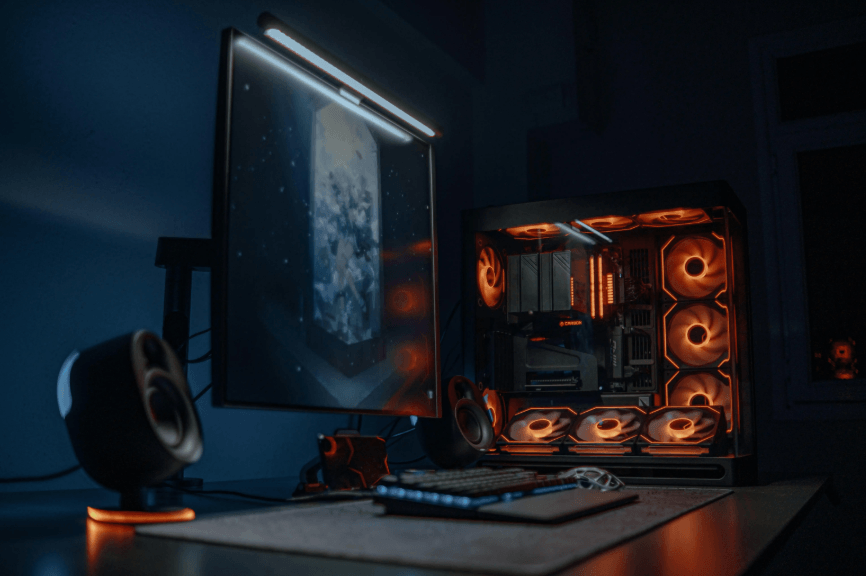
Gaming hardware trends reflect a careful balance of demand, efficiency, and scalability. Real-time ray tracing, AI upscaling, and memory bandwidth pressures shape GPU and CPU choices, while cooling and power efficiency constrain practical builds. Price-to-performance dynamics, upgrade cadence, and future-proofing influence purchasing and configuration decisions. The interplay of bottlenecks and cooling solutions keeps high refresh targets attainable, yet the next leap remains contingent on evolving workloads and platform support—an ongoing pivot worth watching.
What’s Driving Today’s Gaming Hardware Leap
The current surge in gaming hardware is driven by a convergence of demanding workloads, advanced graphics pipelines, and rising expectations for realism. This dynamic centers on power efficiency gains and robust software ecosystems, enabling broader optimization and tighter hardware-software coupling. Analysts underscore scalable architectures, energy-aware design, and modular platforms as essential to sustaining performance growth while preserving freedom of choice for developers and players alike.
See also: lebossduturf
Visual Tech Shifts: Ray Tracing, DLSS/FSR, and Beyond
Visual tech shifts are redefining realism in modern games through real-time ray tracing, AI-assisted upscaling (DLSS/FSR), and emerging approaches that extend beyond current pipelines, delivering higher fidelity with manageable performance costs.
Ray tracing reshapes lighting and reflections while depth buffering preserves depth cues across scenes.
Upscaling engines optimize frame budgets, but demand memory bandwidth, and push precision in artifacts management, enabling broader accessibility without sacrificing visual fidelity or core gameplay freedom.
The Pulse of Hardware: CPUs, GPUs, and Cooling for High Refresh
GPU-driven rendering enhancements and upscaling have highlighted where bottlenecks shift, but sustaining high refresh rates depends on a balanced hardware stack: CPUs that feed data with low latency, GPUs capable of maintaining steady frame budgets, and cooling solutions that prevent thermal throttling during sustained loads.
The setup favors responsive peripherals like gaming keyboards and neon lighting to reflect performance ethos without distraction.
Buying, Building, and Budgeting: Navigating Price-to-Performance Trends
Price-to-performance remains the core discipline for PC gamers evaluating components, balancing upfront costs against sustained utility across generations. Buyers assess value through budget tradeoffs and expected upgrade cadence, prioritizing components that maximize long-term performance per dollar.
Decisions reflect deliberate tradeoffs between immediate gains and future resilience, aligning build choices with evolving software demands while preserving freedom to adapt without excessive expenditure or premature obsolescence.
Frequently Asked Questions
Which Upcoming Tech Will Most Reshape Gaming Performance Next Year?
Upcoming tech likely to reshape gaming performance next year includes enhanced ray tracing hardware and advanced upscaling networks, delivering higher fidelity and efficiency; the combination promises deeper visuals, lower latency, and greater freedom for developers and players alike.
How Do I Choose Between GPUS for 1080P vs. 4K Gaming?
Choosing between GPUs for 1080p, 4K, or high refresh gaming hinges on target resolution and frame goals; budget vs. ultra quiet GPUs trade-offs, with performance meaningfully shifting toward 4K. Symbolism frames choices: balance, clarity, speed.
What Impact Will PCIE 5.0 and Xess Have on Frames?
PCIE 5.0 and XESS impact: immediate frame effects depend on GPU workload and bottlenecks; potential bandwidth gains may reduce latency and streaming overhead, but real-world frames improve marginally without optimized software pipelines and balanced system design.
Are Consoles Still Relevant for PC Hardware Comparisons?
Consoles remain relevant for PC hardware comparisons, providing platform benchmarks and visibility for cross-architecture parity. The concept of playstation parity persists, while console emulation offers controlled baselines to assess performance gaps across generations and APIs.
How Will VR and AR Affect Future GPU Demand?
VR adoption and AR wearables will elevate gaming workloads, driving demand for future GPUs with higher bandwidth and ray-tracing efficiency, while architectural flexibility enables adaptive rendering as standalone devices proliferate and ecosystems demand sustainable compute growth.
Conclusion
In a landscape defined by coincidence, the convergence of ray tracing, AI upscaling, and modular cooling appears almost inevitable, shaping a predictable upgrade arc. As game textures tighten and frame budgets tighten further, performance-per-watt becomes the currency of choice. The trio of CPUs, GPUs, and efficient memory drives steady progress, while pricing nudges buyers toward measured, smarter investments. The result: a gaming future where technical leaps align with practical, repeatable purchase decisions.